Mitigating Polarization Through Identity Signaling and Information Exchange
Mar 1, 2024··
0 min read
Qiankun Zhong
Abstract
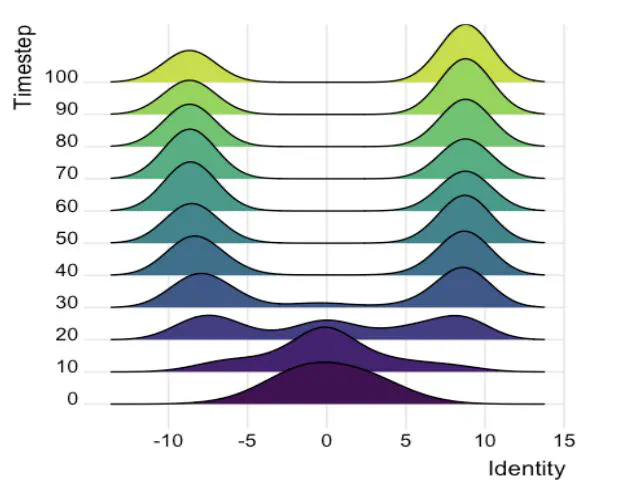
Discussions around controversial social topics can serve two purposes: information exchange and identity signaling. When identity signaling dominates the discussion, it might lead to affective polarization, limiting the scope of information exchange and resulting in biased agreement. To reduce polarization and promote information exchange, we need to first understand the generative mechanism of identity-driven polarization and its relationship to information transmission and learning. This mechanism has attracted much attention in social science, yet few theories address the origins of polarization without assuming an oppositional relationship between pre-existing groups. In this paper, we develop an evolutionary model that generates identity-driven polarization from a normal distribution of identity. This allows us to answer two fundamental questions: What are the minimum requirements for generating and subsequently maintaining polarization? How can we intervene in this polarization process to facilitate convergence around ground truth?